Digital Shelf Analytics for FMCG Brands — UAE Quick Commerce Driving Real-Time Market Intelligence
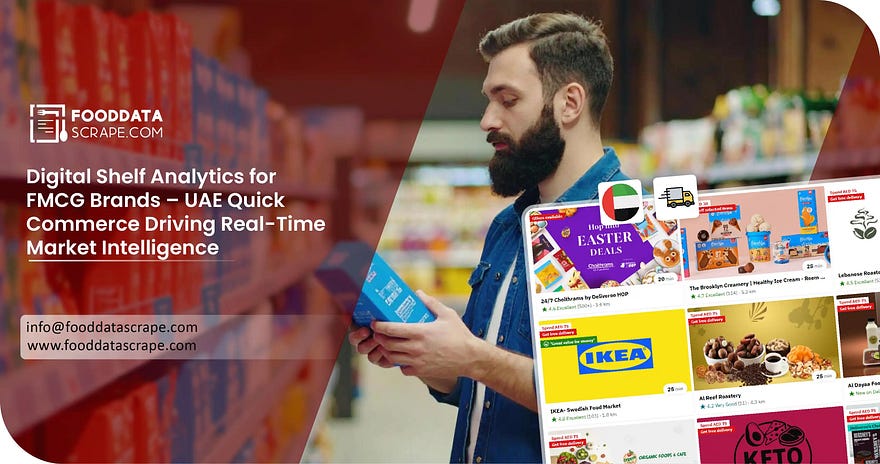
This case study highlights how Digital Shelf Analytics for FMCG Brands — UAE Quick Commerce enabled a leading FMCG client to gain real-time visibility into competitive performance across platforms like Talabat mart, noon minutes, Deliveroo, and Careem Quik.
By implementing UAE Q-Commerce Price & Stock Monitoring, the client tracked dark store-level inventory availability, identifying frequent stockouts and demand gaps across high-performing SKUs in specific UAE zones.
Using Extract FMCG Product Data from UAE Quick Commerce Apps, the solution captured granular insights into pricing fluctuations, discount strategies, bundle offers, and product rankings across multiple quick commerce platforms.
The analytics dashboard provided SKU-level comparisons, helping the client optimize pricing parity and promotional timing against competitors.
Additionally, dark store mapping enabled better supply chain planning and inventory redistribution, reducing lost sales opportunities.
Overall, the approach empowered the client with actionable intelligence to improve product visibility, enhance discount effectiveness, and maintain consistent availability, resulting in increased conversions and stronger market positioning in the UAE quick commerce ecosystem.
The Client
The client is a leading FMCG brand operating across the UAE, known for its wide range of high-demand grocery and household products. With growing competition on quick commerce platforms, the brand needed deeper visibility into product performance, pricing, and availability across multiple dark stores.
By implementing Digital Shelf Benchmarking for FMCG in UAE, the client was able to evaluate its positioning against competitors and identify gaps in pricing and assortment strategies.
Using Scrape FMCG Brands Data from UAE Quick Commerce Apps, the company collected detailed SKU-level insights, including stock availability, pricing variations, and discount patterns across different platforms.
Additionally, Web Scraping FMCG Brands Data from UAE Quick Commerce Apps enabled continuous monitoring of market trends and competitor activities.
These capabilities helped the client optimize inventory planning, improve pricing decisions, and strengthen its overall digital shelf presence, leading to increased sales and better customer engagement.
Key Challenges
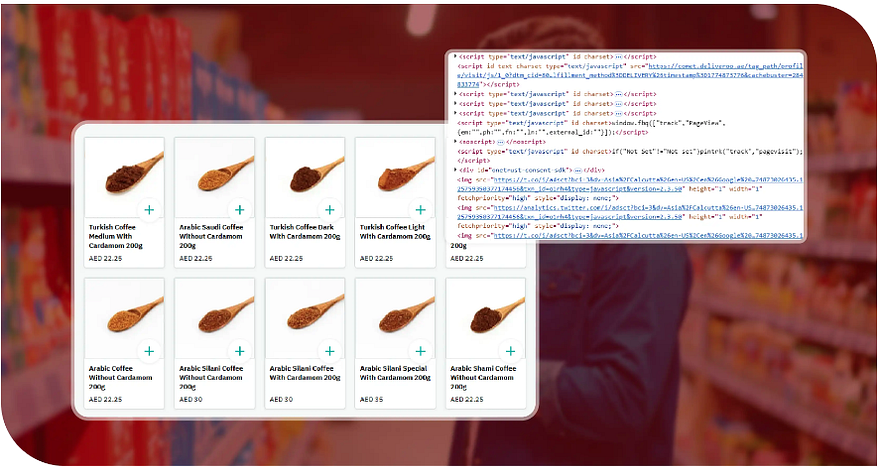
- Limited Visibility into Dynamic Pricing and Offers
The client struggled to monitor real-time price fluctuations and promotional campaigns across multiple platforms. Without UAE Quick Commerce Discount & Offer Tracking, identifying effective discount strategies, flash sales, and competitor pricing gaps became difficult, impacting their ability to remain competitive. - Fragmented and Inconsistent Data Sources
Data collected from various quick commerce apps was scattered and unstructured, making analysis challenging. The absence of centralized Quick Commerce Datasets limited the client’s ability to compare SKU-level performance, stock availability, and regional demand patterns efficiently. - Lack of Automated Data Collection Mechanisms
Manual tracking of product listings, stock status, and pricing led to delays and inaccuracies. Without Web Scraping Quick Commerce Data, the client faced inefficiencies in capturing real-time insights, hindering timely decision-making and reducing responsiveness to market changes.
Key Solutions

- Real-Time Pricing and Promotion Intelligence
We deployed automated systems to continuously monitor pricing, discounts, and bundle offers across multiple quick commerce platforms. This enabled the client to react quickly to competitor strategies, optimize promotions, and maintain pricing consistency across regions and dark stores. - Centralized Data Aggregation and Analytics Dashboard
A unified dashboard was developed to consolidate SKU-level data from all platforms into a single interface. This provided clear visibility into stock availability, regional demand trends, and competitor benchmarking, helping stakeholders make faster, data-driven decisions with improved operational efficiency. - Automated Dark Store Monitoring and Alerts
We implemented intelligent tracking of dark store-level inventory with automated alerts for stockouts and low availability. This allowed the client to proactively manage inventory distribution, reduce lost sales opportunities, and ensure consistent product availability across high-demand locations.
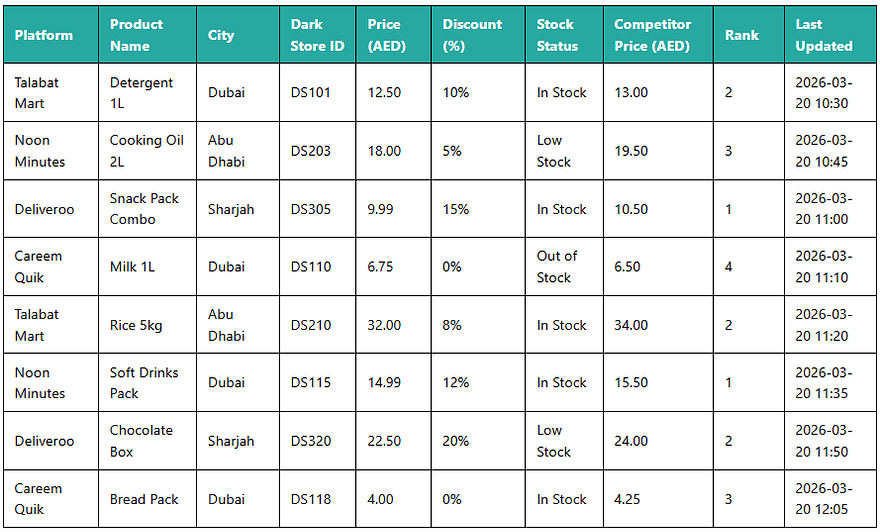
Sample Data
Methodologies Used
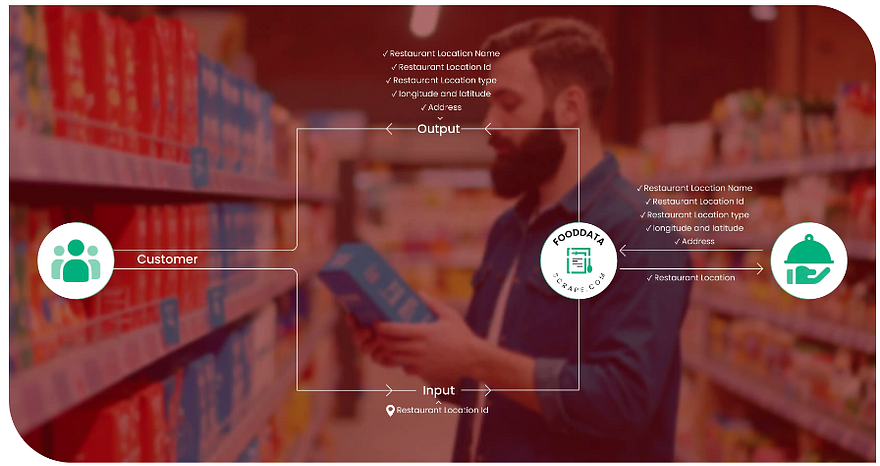
- Multi-Platform Data Extraction Framework
We designed a scalable extraction framework to collect SKU-level data from multiple quick commerce platforms simultaneously. This ensured consistent coverage across regions, capturing product listings, pricing, discounts, and availability while maintaining structured, high-quality datasets for analysis. - Dark Store Mapping and Geo-Tagging
Our methodology included mapping dark stores to specific geographic zones using pin codes and service areas. This enabled precise tracking of inventory availability, regional demand patterns, and fulfillment performance, helping identify location-specific gaps and optimization opportunities. - Automated Data Normalization and Structuring
We standardized raw data from diverse sources into a unified format, resolving inconsistencies in product names, units, and categories. This ensured accurate SKU matching across platforms and enabled reliable comparisons for pricing, promotions, and stock availability. - Real-Time Monitoring and Alert Systems
We implemented continuous data pipelines with automated alerts for stockouts, price changes, and discount variations. This proactive monitoring allowed the client to respond quickly to market changes, optimize inventory distribution, and maintain competitive positioning. - Advanced Analytics and Visualization Techniques
We applied analytical models and interactive dashboards to transform raw data into actionable insights. Visualizations highlighted trends in pricing, demand, and competitor strategies, enabling stakeholders to make informed decisions and improve overall digital shelf performance.
Advantages of Collecting Data Using Food Data Scrape
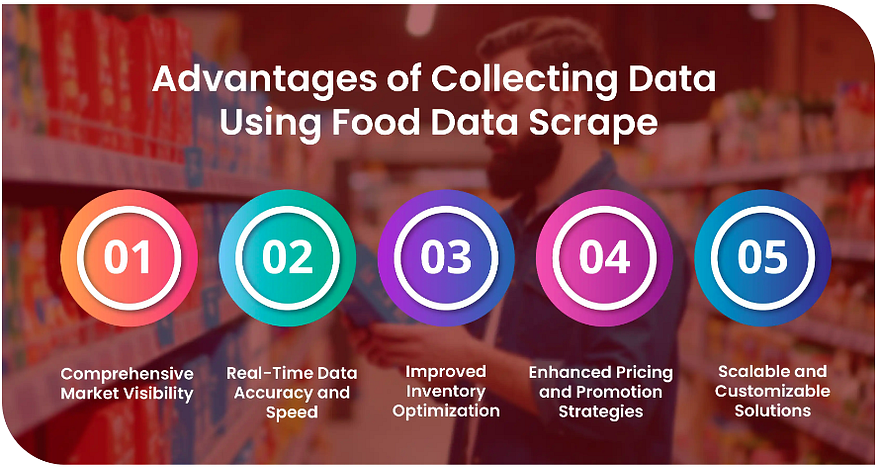
- Comprehensive Market Visibility
Our data scraping services provide end-to-end visibility into pricing, stock availability, and promotions across multiple platforms. This enables brands to monitor competitors effectively, identify gaps, and make informed decisions to strengthen their market positioning and digital shelf presence. - Real-Time Data Accuracy and Speed
With automated extraction systems, clients receive real-time updates on product performance, ensuring accurate and up-to-date insights. This eliminates delays caused by manual tracking and allows faster response to pricing changes, stock fluctuations, and promotional activities. - Improved Inventory Optimization
By tracking stock levels across locations, our solutions help businesses identify low-stock or out-of-stock situations quickly. This supports efficient inventory redistribution, reduces lost sales opportunities, and ensures consistent product availability in high-demand areas. - Enhanced Pricing and Promotion Strategies
Access to detailed pricing and discount data allows brands to fine-tune their promotional campaigns. Businesses can align pricing with competitors, test offers, and maximize conversion rates while maintaining profitability and customer engagement. - Scalable and Customizable Solutions
Our services are designed to scale with business needs, supporting multiple platforms, regions, and product categories. Customizable dashboards and reports ensure that clients receive insights tailored to their specific goals, improving operational efficiency and decision-making processes.
Client’s Testimonial
As a Category Manager at a leading FMCG brand in the UAE, I was impressed by the depth and accuracy of insights delivered. The solution gave us clear visibility into pricing, stock availability, and promotions across multiple quick commerce platforms. It significantly improved our ability to respond to competitor actions and optimize our inventory distribution at the dark store level. The automated dashboards and real-time alerts helped streamline decision-making and reduced manual effort. Overall, it has strengthened our digital shelf presence, improved operational efficiency, and driven measurable growth in sales and customer engagement across key markets.
— Category Manager
Final Outcome
The final outcome of this engagement delivered significant business impact by transforming fragmented data into actionable insights. With the implementation of Quick Commerce Data Scraping API, the client gained real-time visibility into pricing, stock availability, and promotions across multiple platforms and dark store locations.
By leveraging Quick Commerce Data Intelligence Services, the brand was able to benchmark competitors effectively, optimize pricing strategies, and improve promotional planning. This led to enhanced inventory management, reduced stockouts, and improved product availability in high-demand regions.
Additionally, faster decision-making and data-driven strategies helped boost customer engagement and conversion rates. Overall, the solution empowered the client to strengthen its digital shelf presence, achieve operational efficiency, and maintain a competitive edge in the rapidly evolving UAE quick commerce market.
Read More: https://www.fooddatascrape.com/digital-shelf-analytics-fmcg-brands-uae-quick-commerce.php
Originally Submitted at: https://www.fooddatascrape.com/index.php
#UAEQCommercePriceStockMonitoring,
#ExtractFMCGProductDataFromUAEQuickCommerceApps,
#DigitalShelfBenchmarkingForFMCGInUAE,
#ScrapeFMCGBrandsDataFromUAEQuickCommerceApps,
#WebScrapingFMCGBrandsDataFromUAEQuickCommerceApps,
#UAEQuickCommerceDiscountOfferTracking,


Comments
Post a Comment