Dark Store Competitive Mapping for Consumer Demand
Unlocking Consumer Demand with Dark Store Competitive Mapping

A leading quick-commerce grocery brand approached us after noticing fluctuating sales across key metro locations. They suspected rising competition from nearby dark stores but lacked clear visibility into competitor coverage, pricing, and assortment strategies. Through Dark Store Competitive Mapping, we identified exact competitor dark store locations, delivery radiuses, service gaps, and high-demand micro-markets.
To strengthen their strategy, we helped them Scrape Dark Store Competitive Data across multiple platforms, tracking SKU availability, discount patterns, surge pricing behavior, and stock-out frequency. This revealed that competitors were aggressively pricing essentials during peak evening hours while limiting premium assortment in low-demand zones.
Using Dark Store Inventory & Pricing Data Scraping, we provided real-time dashboards showing category-wise price differences and inventory depth. The client optimized product placement, adjusted hyperlocal pricing, and launched targeted promotions in underperforming clusters. Within three months, they achieved a 22% increase in order volume and improved last-mile efficiency, gaining measurable competitive advantage in densely contested neighborhoods.
The Client
Our client is a rapidly growing quick-commerce grocery brand aiming to expand its footprint in major urban centers. Facing intense competition, they needed precise insights to optimize operations and pricing across multiple locations. Through City-Wise Dark Store Performance Analysis, we provided detailed metrics on order volumes, peak demand hours, and delivery efficiency for each city, helping them prioritize high-potential areas.
To stay ahead of competitors, they leveraged our Dark Store Competitive Intelligence services, which offered real-time visibility into rival dark stores’ strategies, assortment, and pricing. This intelligence allowed the client to identify gaps in coverage and capitalize on underserved neighborhoods.
Additionally, we enabled them to Extract Grocery Competitive Data from Dark Stores, monitoring stock levels, promotions, and pricing trends across categories. Using these actionable insights, the client optimized inventory management, improved pricing strategies, and refined product offerings. Within months, they achieved higher market share, improved operational efficiency, and strengthened their hyperlocal delivery network.
Key Challenges
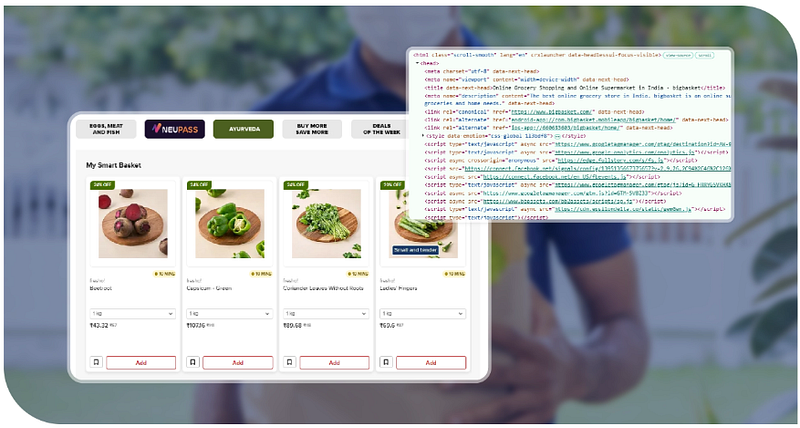
- Limited Visibility into Competitor Pricing: The client struggled to track real-time pricing fluctuations across multiple dark store competitors. Without structured Web Scraping Grocery Data, they lacked clarity on discount strategies, surge pricing patterns, and category-level price gaps impacting customer acquisition and retention.
- Inefficient Data Collection & Integration: Manual tracking methods and fragmented tools created delays in capturing competitor inventory and delivery insights. The absence of a centralized Grocery Delivery Extraction API prevented seamless integration of competitor assortment, stock availability, and hyperlocal service coverage data.
- Lack of Actionable Performance Monitoring: Although sales data was available internally, the client lacked a consolidated Grocery Price Dashboard to compare city-wise pricing, competitor benchmarks, and margin performance. This limited their ability to make fast, data-driven decisions in highly competitive micro-markets.
Key Solutions
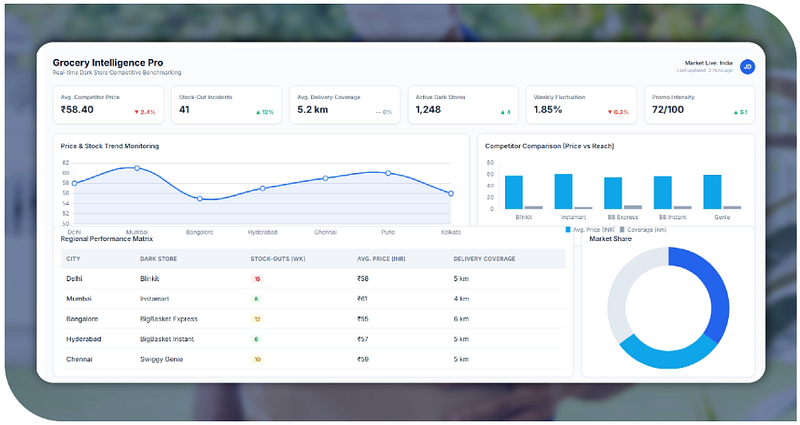
- Difficulty in Monitoring Competitor Pricing: The client struggled to track dynamic pricing across Blinkit and Instamart stores. Without structured Web Scraping Grocery Data, real-time price shifts, promotions, and SKU-level discounts were missed, limiting competitive positioning and affecting revenue.
- Complex Inventory and Delivery Tracking: Monitoring stock-outs and delivery coverage across BigBasket Instant and BigBasket Express was cumbersome. The absence of a robust Grocery Delivery Extraction API caused delays in identifying competitor fulfillment zones and managing supply efficiently.
- Limited Analytical Visibility: Analyzing city-wise performance and competitor benchmarks for Swiggy Genie and Grofers Express was challenging. Without a consolidated Grocery Price Dashboard, the client struggled to optimize hyperlocal pricing and product assortment for maximum sales impact.
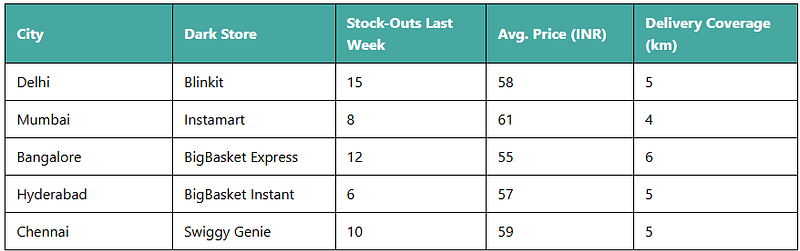
Sample Data Table:
Methodologies Used
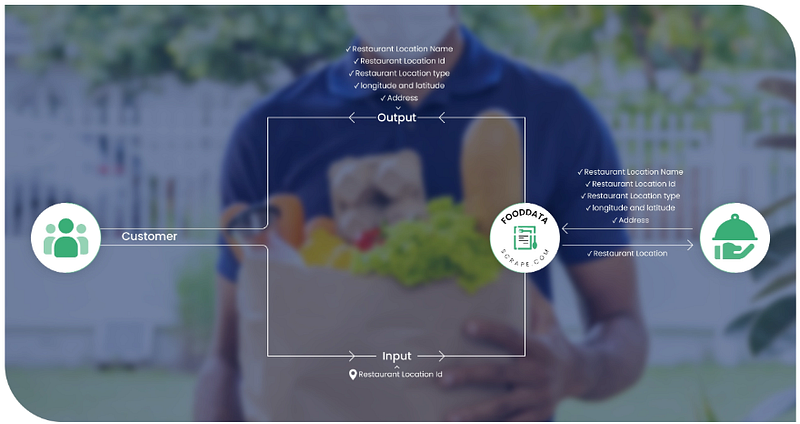
- Competitor Location Mapping: We identified and mapped competitor dark store locations across major cities, analyzing delivery radiuses, high-demand areas, and service gaps. This provided a clear visual of market saturation and potential zones for strategic expansion.
- Real-Time Price Monitoring: We implemented automated tools to continuously track competitor pricing across categories. Dynamic price shifts, promotional offers, and discount trends were captured, enabling the client to respond quickly to market changes and optimize their pricing strategy.
- Inventory Assessment: We monitored stock availability and product assortment across competitor stores. By tracking frequent stock-outs and in-demand SKUs, we identified opportunities to adjust inventory levels and ensure consistent product availability for customers.
- Delivery Performance Analysis: Delivery times, coverage areas, and fulfillment efficiency of competitor stores were evaluated. This allowed the client to identify bottlenecks, optimize routes, and enhance last-mile delivery operations to meet customer expectations effectively.
- Data Visualization & Reporting: Collected insights were consolidated into interactive dashboards and detailed reports. City-wise performance, category trends, and competitor benchmarks were visualized, enabling informed strategic decision-making and easier identification of growth opportunities.
Advantages of Collecting Data Using Food Data Scrape
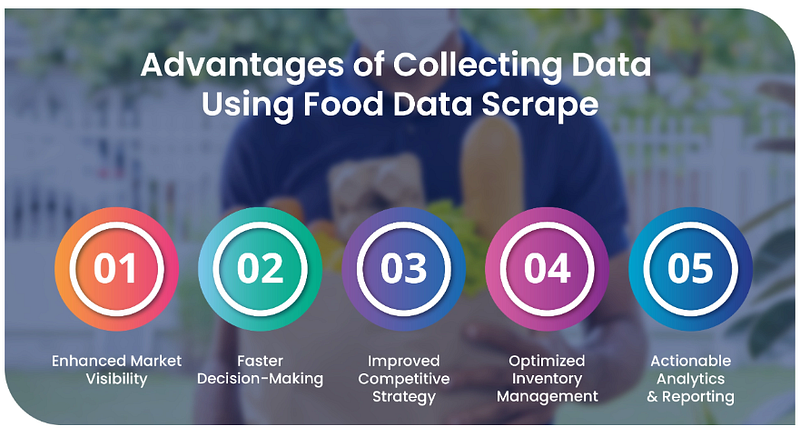
- Enhanced Market Visibility: Our services provide comprehensive insights into competitor operations, product availability, and pricing trends. This empowers clients to make informed decisions, identify market gaps, and understand emerging patterns, ensuring they stay ahead in a rapidly evolving retail landscape.
- Faster Decision-Making: By delivering real-time and structured data, clients can quickly respond to market changes. This reduces reliance on manual monitoring, shortens analysis cycles, and allows for timely adjustments in pricing, promotions, and inventory management, increasing overall operational efficiency.
- Improved Competitive Strategy: Access to detailed competitor data enables clients to benchmark their offerings against rivals. They can identify strengths, weaknesses, and opportunities, allowing them to optimize assortments, promotions, and pricing strategies to gain a tangible competitive edge in target markets.
- Optimized Inventory Management: Our insights into product demand, stock levels, and replenishment patterns help clients maintain optimal inventory. This reduces stock-outs, minimizes overstocking, and ensures high-demand items are always available, improving customer satisfaction and operational profitability.
- Actionable Analytics & Reporting: Data is consolidated into easy-to-read dashboards and reports, providing city-wise, category-wise, and trend-based insights. Clients can track performance, forecast demand, and plan strategies effectively, making data-driven decisions that boost growth and market responsiveness.
Client’s Testimonial
“Working with this team has been a game-changer for our quick-commerce operations. Their services provided us with real-time insights into competitor pricing, inventory availability, and delivery performance across multiple cities. The dashboards and reports were intuitive, enabling our team to make data-driven decisions quickly. We could identify market gaps, optimize our inventory, and adjust pricing strategies effectively, which significantly improved our order volumes and customer satisfaction. The professionalism, accuracy, and timely support from their team exceeded our expectations. I highly recommend their services to any brand looking to gain a competitive edge in hyperlocal grocery delivery.”
— Head of Operations
Final Outcome
The client achieved significant improvements in operational efficiency and market responsiveness after leveraging our services. With a comprehensive Grocery Price Tracking Dashboard, they could monitor competitor pricing, promotions, and stock levels in real time, enabling faster, data-driven decisions. Our insights helped optimize inventory management, reducing stock-outs and ensuring high-demand products were consistently available. By utilizing actionable Grocery Data Intelligence, the client identified underserved areas, adjusted hyperlocal pricing strategies, and enhanced last-mile delivery performance. Additionally, structured Grocery Datasets allowed them to analyze category-wise trends, benchmark against competitors, and forecast demand accurately. Overall, the client gained a measurable competitive advantage, increased order volumes, and strengthened their presence in key urban markets, achieving both growth and profitability goals efficiently.
Read More>>https://www.fooddatascrape.com/grocery-mobile-app-data-scraping.php
#DarkStoreCompetitiveMapping
#ScrapeDarkStoreCompetitiveData
#DarkStoreInventory&PricingDataScraping
#CityWiseDarkStorePerformanceAnalysis
#DarkStoreCompetitiveIntelligence
#ExtractGroceryCompetitiveDataFromDarkStores


Comments
Post a Comment